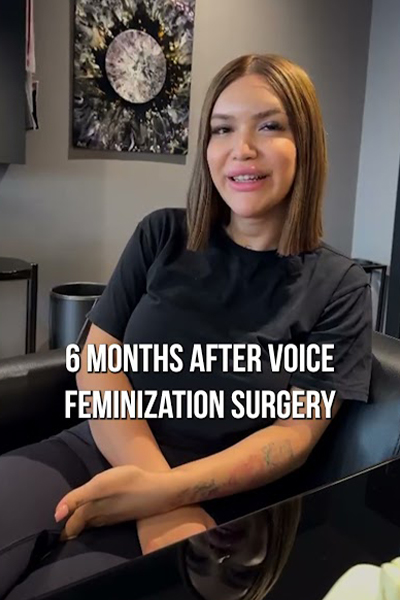
What is Voice Feminization Surgery? Voice feminization surgery (VFS), or phonomicrosurgery, is a gender-affirming laryngeal procedure designed to permanently elevate vocal pitch and modify resonance. By microscopically altering the mass and tension of the vocal folds, this surgery helps transgender women and individuals with deep voices achieve a natural-sounding, higher fundamental frequency (F0) with lasting results.
Voice feminization in Turkey has rapidly become a globally recognized medical procedure for individuals seeking a permanent, higher-pitched, and aesthetically feminine voice. Moving beyond traditional voice therapy, this highly specialized surgical intervention alters the anatomical structure of the vocal cords. The goal is not just a higher pitch, but a natural, harmonious resonance that aligns with your true identity and eliminates vocal dysphoria.
Today, thanks to a world-class medical infrastructure and board-certified otorhinolaryngology (ENT) surgeons, Istanbul is a premier destination for this procedure. It is particularly preferred by international patients looking for safe, effective, and natural-sounding vocal aesthetics combined with comprehensive, VIP medical care.
Advanced Voice Feminization Surgery Techniques
Modern voice pitch elevation surgeries in Turkey utilize cutting-edge medical technologies and are 100% customized to the patient’s laryngeal anatomy. To ensure optimal E-E-A-T (Effectiveness, Expertise, Authoritativeness, and Trustworthiness) standards, specialists like Dr. Elad Azizli employ minimally invasive, endoscopic approaches.
Wendler Glottoplasty (Anterior Web Formation)
Considered the gold standard and the most widely performed technique globally, Wendler Glottoplasty is performed entirely through the mouth using a rigid endoscope and a high-definition surgical microscope. During the procedure, the surgeon de-epithelializes the anterior (front) third of the vocal folds and carefully sutures them together. This creates an anterior web, effectively shortening the vibrating length of the vocal cords and resulting in a permanently higher feminine pitch.
Cricothyroid Approximation (CTA)
While less common as a standalone procedure today, CTA involves altering the laryngeal framework from the outside. By placing sutures between the cricoid and thyroid cartilages, this technique mimics the natural contraction of the cricothyroid muscle. This increases vocal fold tension and elevates the fundamental frequency, though it is often combined with other techniques for optimal resonance.
Laser Reduction Glottoplasty (LRG)
Utilizing advanced CO2 or KTP laser technology, LRG focuses on precisely vaporizing and thinning the vocal fold mass. Since lighter, thinner vocal cords vibrate at higher frequencies, this specialized microscopic intervention promotes a naturally elevated vocal pitch without extensive suturing.
Voice Feminization Surgery vs. Voice Therapy
For international patients researching gender-affirming voice care, understanding the clinical differences between vocal training and surgical intervention is vital for setting realistic expectations. While therapy focuses on behavioral changes, surgery alters the physical anatomy.
Clinical Feature
Voice Feminization Surgery (VFS)
Feminizing Voice Therapy
Nature of Change
Permanent anatomical and structural alteration.
Requires continuous, conscious behavioral effort.
Pitch Elevation (F0)
Significant and distinct physical increase (avg. +40-70 Hz).
Limited fundamental pitch change; focuses on technique.
Primary Focus
Vocal fold length, tension, and mass reduction.
Resonance, intonation, articulation, and speech patterns.
Surgical Duration and The Recovery Protocol
Voice feminization surgery is a minimally invasive outpatient procedure that typically takes between 40 to 90 minutes under general anesthesia. International patients traveling to Turkey are carefully monitored and usually discharged on the same day or kept overnight for standard medical observation, ensuring maximum safety and comfort.
The long-term acoustic success of a Wendler Glottoplasty heavily relies on strict adherence to the post-operative recovery protocol. The immediate healing phase requires absolute vocal rest for 7 to 10 days. This means no speaking, whispering, laughing out loud, or throat clearing. Whispering places immense mechanical stress on the healing sutures and is strictly prohibited. Following this silent period, patients undergo specialized post-op voice therapy with a speech-language pathologist to safely adapt to their new vocal biomechanics. While initial pitch changes are noticed immediately after the vocal rest ends, the fully stabilized, natural feminine voice emerges gradually over 3 to 6 months.
Why Choose Turkey for Voice Feminization in 2026?
Turkey, specifically Istanbul, has solidified its position as the global epicenter for medical tourism and advanced laryngology. Patients choose Turkey not only for the cost advantages but for the uncompromising clinical quality. Surgeries are performed in JCI-accredited hospitals equipped with the latest endoscopic visualization and laser technologies.
Moreover, Turkish clinics excel in providing comprehensive, stress-free medical tourism packages. From the moment you land, services such as VIP airport transfers, luxury hotel accommodations, multilingual patient coordinators, and rigorous post-operative follow-ups are seamlessly integrated into your surgical journey.
Voice Feminization Turkey Cost (2026 UK / GBP Pricing)
For patients traveling from the UK, Europe, or North America, Turkey offers a distinct financial advantage without sacrificing medical authority. In 2026, the comprehensive cost for Voice Feminization Surgery in Turkey generally ranges between £3,500 and £5,500 GBP. This pricing is highly competitive compared to Western clinics, where the surgery alone can exceed £10,000.
To ensure complete transparency, the table below breaks down the estimated costs and what is typically included in a premium medical tourism package in Istanbul.
Service / Package Tier
Estimated Cost (GBP)
Inclusions & Details
Surgery Only (Medical Fees)
£3,500 – £4,200
Surgeon’s fee, general anesthesia, operating room costs, and standard hospital medications.
All-Inclusive VIP Package
£4,500 – £5,500
Surgery, 4-5 nights premium hotel stay, VIP airport/clinic transfers, personal translator, and pre/post-op tests.
Factors Influencing Price
Costs vary based on the specific surgical technique (Wendler Glottoplasty vs. Laser Reduction), the surgeon’s international authority, and chosen accommodation standards.
Get Your Custom Voice Analysis & Quote in Turkey
Contact our internationally accredited clinic today for an expert medical evaluation. Discover the most suitable surgical method for your vocal anatomy and receive a transparent, all-inclusive pricing plan in GBP.
Yes, the anatomical changes achieved through techniques like Wendler Glottoplasty are permanent. When performed by a highly experienced voice surgeon utilizing modern micro-suturing techniques, it is a remarkably safe procedure with high patient satisfaction rates.
However, as a highly specialized medical procedure, it requires expert precision. Potential risks, such as temporary hoarseness, delayed healing, or suboptimal pitch elevation, are drastically minimized by choosing a board-certified otorhinolaryngologist and adhering strictly to the post-operative vocal hygiene rules.
Why Dr. Elad Azizli for Voice Surgery in Istanbul?
When searching for the best voice feminization Turkey has to offer, the surgical authority and specific laryngeal expertise of the physician are paramount. Dr. Elad Azizli is a distinguished Ear, Nose, and Throat (ENT) specialist with profound, verifiable expertise in functional laryngeal surgery and voice aesthetics.
Having successfully transformed the voices of hundreds of international patients, Dr. Azizli does not rely on a “one-size-fits-all” approach. He combines state-of-the-art glottoplasty techniques with rigorous pre-operative acoustic analysis and compassionate, patient-first care. His ultimate goal is to deliver a natural, permanent, and confident feminine voice that harmonizes beautifully with your personal identity.
Are the results of voice thinning operation permanent?
The results of voice thinning are usually permanent. However, the individual’s vocal habits, lifestyle and other factors can affect these results.
How long does the healing process take after voice thinning operation?
The healing process can vary from individual to individual, but usually takes several weeks. It may take time for the voice to fully recover and the desired tone to be achieved.
Is voice therapy necessary before voice feminization surgery?
Although voice therapy is not mandatory before voice feminization surgery, it is strongly recommended. Voice therapy not only focuses on increasing pitch, but also feminizes speech patterns, intonation, resonance, and articulation. Voice feminization surgery primarily raises the pitch of the voice but does not change a “masculine” speaking style on its own. When combined with therapy, voice feminization surgery produces much more natural and convincing results. Some patients achieve satisfactory outcomes with voice therapy alone and may not need surgery, while others consider surgery when therapy does not provide sufficient improvement.
Will my voice sound natural or artificial after voice feminization surgery?
When performed by an experienced surgeon, voice feminization surgery results in a natural-sounding voice, without a shrill or strained tone. The goal of the procedure is not only to raise the pitch, but also to preserve voice quality and fluency. With a good outcome, listeners will not realize that surgery was performed; they will simply hear a woman with a naturally higher-pitched voice. Continuing voice therapy after voice feminization surgery helps the voice sound more natural and feminine, as resonance and intonation are just as important as pitch. In the first few months after surgery, the voice may sound slightly hoarse or strained, which is normal and gradually improves over time.
How is voice feminization surgery performed? Will there be a scar on my neck?
There are several surgical techniques for voice feminization surgery, and the choice of method depends on the surgeon’s preference and the patient’s anatomy. The most commonly used technique is glottoplasty. In this method, the vocal cords are accessed endoscopically through the mouth, and the front portions are fused together using a laser to shorten the vibrating length of the vocal cords. With this technique, no incision is made on the neck.
Vocal cord nodules are benign, callus-like lesions that usually develop on both vocal folds after repeated voice strain or inefficient voice use. They..
Vocal cord polyp surgery is a microsurgical procedure used to remove a benign vocal fold polyp when it causes persistent hoarseness, impaired vibratio..
Vocal cord cyst surgery is a microsurgical treatment used to remove a cyst that disrupts normal vocal fold vibration and affects voice quality. The pr..
Vocal Cord Paralysis
The nerves that perform motor and sensory tasks in humans are the Cranial Nerves (Cranial Nerves or Cranial Pairs), which are di..
Vocal Cord Cancer
The biological event necessary for the reproduction of single-celled organisms, the renewal of tissues in multicellular organisms a..
What is Mutational Falsetto Puberphonia?
To be a child means to be curious, to be happy with what you have learnt and experienced, to live carefree w..
Problems of Professional Voice Users
The word “professional”, which is used very often in everyday life, but often in the wrong sense, has two meanin..
 Türkçe
 РУССКИЙ
 Spanish
 Français